
Infrared Spectrometers
Overview of Infrared (IR) Spectrometers for Chemical Testing
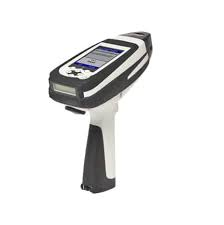
Infrared (IR) spectrometers for chemical testing are analytical instruments used to measure the interaction of infrared light with matter to identify and analyze chemical compounds in a sample. IR spectroscopy is a powerful and widely used technique in chemistry, materials science, pharmaceuticals, and many other fields. Here’s an overview of infrared spectrometers:

Chemical Fingerprinting
IR spectroscopy provides a unique fingerprint for each compound, allowing for the identification of unknown substances.
Versatility
IR spectroscopy can be used to analyze solids, liquids, and gases.
Non-destructive
IR spectroscopy is typically non-destructive, allowing for the analysis of samples without altering their chemical composition.
High Sensitivity
Modern IR spectrometers can detect compounds in trace amounts.
Types Of IR Spectrometers
FT-IR Spectrometers (Fourier Transform Infrared Spectrometers)
These are the most common types of IR spectrometers. They use an interferometer to generate high-quality IR spectra.
Dispersive IR Spectrometers
Less common today, these spectrometers use dispersive elements like prisms or gratings to separate IR wavelengths.
Near-Infrared (NIR) Spectrometers
NIR spectrometers cover the near-infrared region of the spectrum (approximately 800-2500 nm) and are used for applications like food quality control and pharmaceutical analysis.
Mid-Infrared (MIR) Spectrometers
MIR spectrometers cover the mid-infrared region (approximately 2500-25,000 nm) and are widely used for organic and inorganic compound analysis.
Working Principles
A typical IR spectrometer consists of the following components:
- Infrared Light Source: Typically, a source like a heated filament or a tungsten-halogen lamp emits a broad spectrum of IR radiation.
- Sample Compartment: The sample is placed in a compartment where it interacts with the IR radiation.
- Monochromator: Selects a specific wavelength of IR light from the broadband source.
- Sample Holder: A variety of sample holders are used, including liquid cells, gas cells, and solid sample holders.
- Detector: Measures the intensity of the transmitted or absorbed IR radiation.
- Data System: Collects, processes, and analyzes the data, generating an IR spectrum.
Key Features
- Chemical Fingerprinting: IR spectroscopy provides a unique fingerprint for each compound, allowing for the identification of unknown substances.
- Quantitative Analysis: IR spectroscopy can also be used for quantitative analysis, such as determining the concentration of a particular substance in a mixture.
- Non-destructive: IR spectroscopy is typically non-destructive, allowing for the analysis of samples without altering their chemical composition.
- High Sensitivity: Modern IR spectrometers can detect compounds in trace amounts.
- Versatility: IR spectroscopy can be used to analyze solids, liquids, and gases.
Applications
- Chemical Analysis: Identification of organic and inorganic compounds, functional groups, and structural analysis.
- Pharmaceuticals: Quality control, formulation analysis, and drug development.
- Materials Science: Characterization of polymers, coatings, and materials.
- Environmental Monitoring: Analysis of air and water pollutants.
- Food and Beverage Industry: Determination of food quality, composition, and authenticity.
- Forensic Science: Analysis of evidence, including drugs and explosives.
Maintenance
- Routine cleaning and maintenance of the sample compartment and optical components.
- Calibration using standard reference materials to ensure accurate spectra.
- Regular performance checks and system validation to maintain instrument accuracy.