
Refractometers
Overview of Refractometers for Chemical Testing
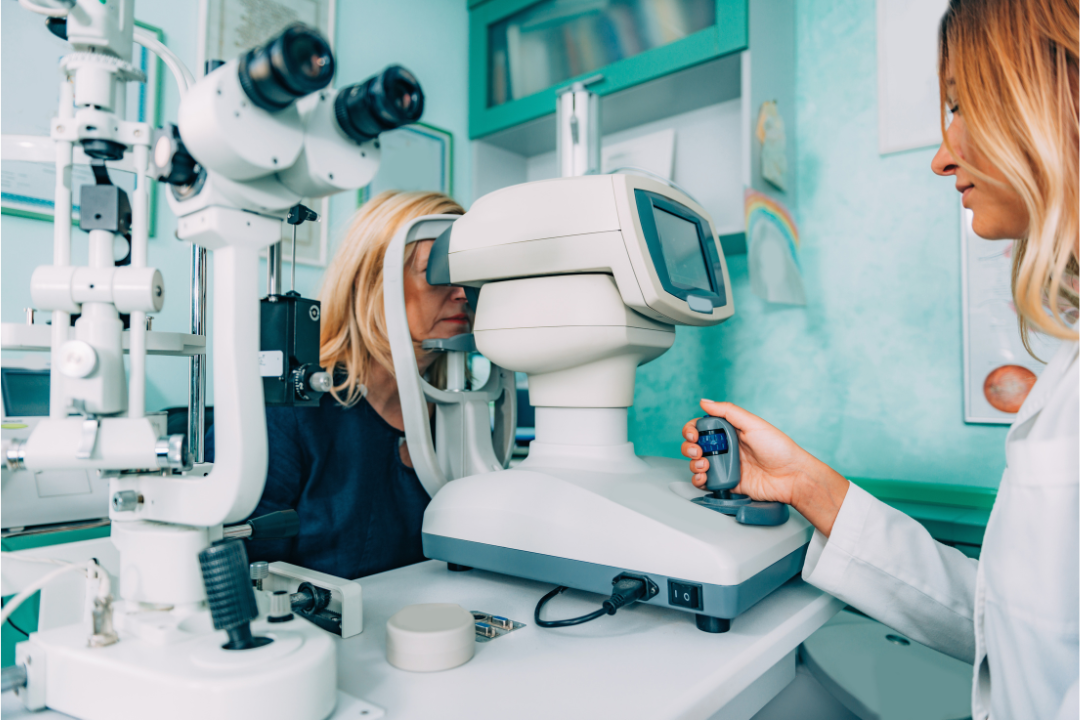
Refractometers for chemical testing are optical instruments used to measure the refractive index (RI) or the concentration of a solute in a solution. They are commonly employed in various scientific, industrial, and research applications, particularly in the fields of chemistry, food and beverage, pharmaceuticals, and biology. Here’s an overview of refractometers:
Refractive Index Measurement
Refractometers determine the refractive index of a sample, which is related to the speed of light in the sample medium.
Non-Destructive
Refractometry is a non-destructive technique, allowing samples to be measured without alteration.
Concentration Measurement
Refractometers can also be used to measure the concentration of a solute in a solution, particularly in solutions where the refractive index changes with solute concentration.
Simple and Rapid
These instruments provide quick and straightforward measurements, making them suitable for routine analysis.
Types Of Refractometers
Analog Refractometers
These chemical testing instruments have a scale that is read visually to determine the refractive index or concentration.
Digital Refractometers
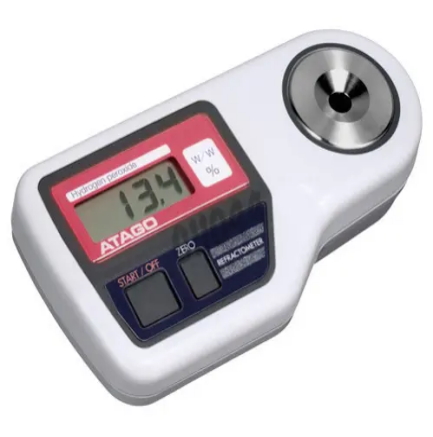
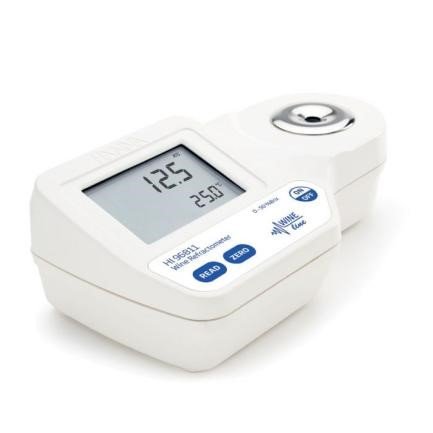
These instruments provide a digital readout of the refractive index or concentration, offering increased accuracy and precision.
Abbe Refractometers
More advanced instruments that allow for measurements at various wavelengths of light and provide additional features for temperature control and correction.
Working Principles
A typical refractometer consists of the following components:
- Prism or Sample Well: The sample is placed on a transparent surface, often a prism or a well.
- Light Source: A light source, typically an LED or a lamp, directs light into the sample.
- Prism Surface: The light passing through the sample interacts with the sample’s refractive index.
- Detector: Measures the angle at which the light exits the sample.
- Scale or Digital Display: The instrument’s scale or digital display provides the refractive index or concentration reading.
Key Features
- Wavelength Range: Spectrophotometers for chemical testing can cover a wide range of wavelengths, often from 190 nm (UV) to 1100 nm (NIR).
- Accuracy: They offer high precision and accuracy in measuring light absorption or transmission.
- Versatility: Spectrophotometers can analyze a variety of sample types, including liquids, solids, and gases.
- Single-Beam and Double-Beam Models: Single-beam spectrophotometers measure the sample and reference sequentially, while double-beam spectrophotometers measure them simultaneously, providing better accuracy.
- Spectral Scanning: Some models can scan a broad range of wavelengths to generate a complete spectrum.
- Quantitative Analysis: Spectrophotometers are used for quantitative analysis of concentration (e.g., in colorimetry) based on Beer’s law.
- Qualitative Analysis: They help identify compounds based on their absorption or emission spectra.
- Sample Compartments: Accommodate different sample holders, including cuvettes, test tubes, and solid sample holders.
- Autozero and Baseline Correction: Features that improve accuracy by eliminating background noise.
- Data Storage and Export: Many modern spectrophotometers have data storage and export capabilities for convenience and analysis.
- Kinetic Measurements: Some models can monitor changes in absorbance over time, allowing for kinetic studies.
Applications
- Chemical Analysis: Identification and characterization of chemical substances based on their refractive index.
- Quality Control: Determination of the concentration of solutes in solutions, including sugar content in food and beverages.
- Pharmaceuticals: Monitoring and quality control of pharmaceutical formulations.
- Petroleum Industry: Analysis of the refractive index of crude oil and petroleum products.
- Biological and Clinical Research: Determination of protein concentrations, serum analysis, and cell culture applications.
- Gemology: Identification of gemstones based on their refractive properties.
Maintenance
- Regular calibration using standard reference materials to ensure measurement accuracy.
- Cleaning and maintenance of the prism or sample well and optical components.
- Proper storage and handling to prevent damage to the instrument.