
Gas Chromatographs
Precision Tools of Gas Chromatographs GC
Gas Chromatographs (GC) for chemical testing are analytical instruments used to separate, identify, and quantify the components of a gaseous or volatile liquid mixture. GC is widely employed in chemistry, biochemistry, pharmaceuticals, environmental science, and various other fields for its ability to provide precise and sensitive analysis. Here’s an overview of gas chromatographs:
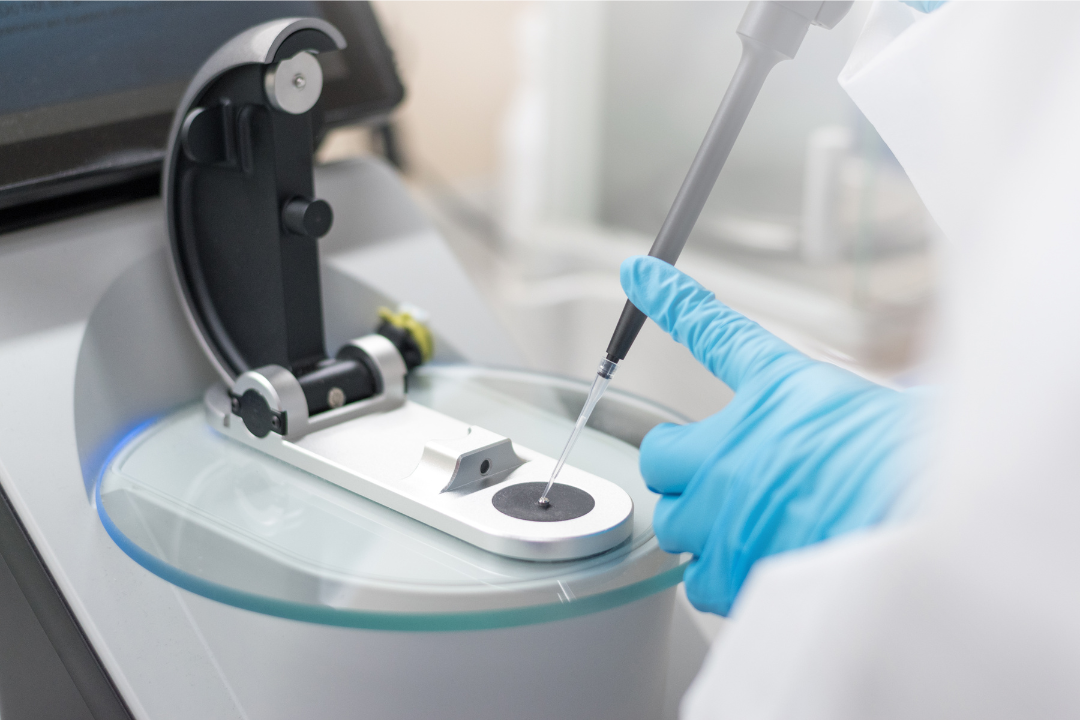
Injector
Vaporizes the sample and introduces it into the chromatographic column.
Carrier Gas
The mobile phase that carries the sample through the column. Common carrier gases include helium, hydrogen, and nitrogen.
Detector
Detects and quantifies the separated components. Common types include Flame Ionization Detector (FID), Thermal Conductivity Detector (TCD), and Mass Spectrometer (MS).
Data Acquisition System
Collects and records detector signals to generate the chromatogram.
Types Of Gas Chromatography
Gas-Liquid Chromatography (GLC Or GC)
Utilizes a liquid stationary phase on the column. Commonly used for separating volatile organic compounds.
Gas-Solid Chromatography (GSC)
Employs a solid stationary phase on the column. Less commonly used than GLC.
High-Performance Liquid Chromatography (HPLC)
Although primarily used for liquid samples, HPLC can also be adapted for gas samples.
Two-Dimensional Gas Chromatography (2D-GC)
Combines two columns with different stationary phases to enhance separation capabilities.
Working Principles
- Gas chromatography relies on the principle of differential partitioning, which separates components based on their distribution between a stationary phase and a mobile phase (usually a carrier gas).
- The sample is injected into a heated injector, where it vaporizes into the carrier gas.
- The mixture then enters a chromatographic column, typically packed with a stationary phase or coated with a stationary liquid phase.
- As the components travel through the column, they partition between the stationary and mobile phases, leading to differential retention times.
- A detector at the end of the column measures the concentration of each component as it exits the column.
- The data collected produces a chromatogram, which is a graphical representation of the separation, with peaks representing individual components.
Key Features
- High Separation Efficiency: GC provides excellent separation of complex mixtures.
- High Sensitivity: GC can detect components at very low concentrations.
- Quantitative Analysis: GC is suitable for quantitative analysis, enabling the determination of component concentrations.
- Wide Range of Applications: Used in various fields, including environmental monitoring, forensic science, pharmaceuticals, petrochemicals, and food analysis.
- Speed: GC analysis is typically fast, allowing for high sample throughput.
- Selectivity: Different stationary phases and detectors offer selectivity for specific compound classes.
Applications
- Environmental Analysis: Monitoring pollutants in air and water samples.
- Pharmaceutical Analysis: Identifying and quantifying drug compounds in formulations.
- Food and Beverage Analysis: Determining flavor compounds, additives, and contaminants.
- Petrochemical Industry: Analyzing hydrocarbon mixtures and fuels.
- Forensic Science: Detecting drugs, explosives, and volatile compounds in forensic investigations.
- Quality Control: Ensuring product quality in various industries.
Maintenance
- Routine maintenance, including column replacement, detector cleaning, and system calibration.
- Regular checks of carrier gas purity and flow rates.
- Storage of columns and samples under appropriate conditions to prevent contamination.